
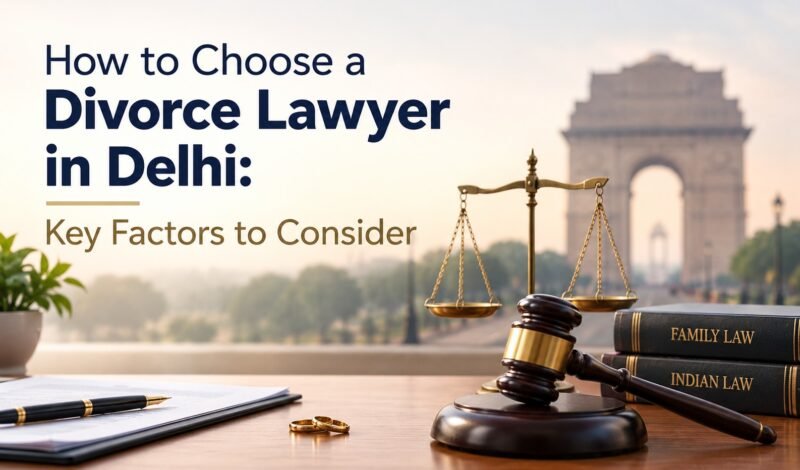

Divorce is not simply a legal procedure. It can involve important decisions about children, finances, property, maintenance and the future of both spouses. When a marriage reaches this stage, having the right legal guidance can make the process more structured and help you understand your rights and available options. For someone searching for a Divorce Lawyer in Delhi, the biggest challenge is often knowing whom to trust. Delhi has many advocates and law firms handling matrimonial matters, but every lawyer may not have the same experience, approach or familiarity with the type of case you are facing. The right lawyer should do more than prepare documents and appear in court. They should understand your circumstances, explain the legal process clearly, identify possible challenges and help you make informed decisions. This guide explains the key factors you should consider before choosing a Divorce Lawyer in Delhi.
1. Look for Relevant Family Law Experience
One of the first things to check is whether the lawyer regularly handles matrimonial and family law matters.
Divorce cases can involve several interconnected issues, including:
- Mutual consent divorce
- Contested divorce
- Child custody and visitation
- Maintenance and alimony
- Domestic violence-related proceedings
- Property and financial disputes
- Matrimonial disputes
- Mediation and settlement
- Related civil or criminal proceedings
A lawyer who regularly handles family law matters is more likely to understand the practical challenges associated with these cases. Instead of choosing a lawyer only because they have been practising for many years, ask whether their experience is relevant to your particular situation. For example, the approach required for a straightforward mutual consent divorce can be very different from a contested matrimonial dispute involving allegations, evidence, custody or financial disagreements.
2. Understand Whether You Need a Mutual or Contested Divorce Lawyer
Before selecting a lawyer, understand the broad nature of your divorce matter. In a mutual consent divorce, both spouses agree to end the marriage and generally need to reach an understanding on important issues such as maintenance, custody and other settlement terms. A contested divorce, on the other hand, involves disagreement between the spouses. Depending on the circumstances, the case may involve pleadings, evidence, hearings and other stages of litigation. This distinction matters when choosing legal representation. If your spouse is willing to settle the matter amicably, you may want a lawyer experienced in negotiation, settlement drafting and mutual consent proceedings. If there are serious disputes, you may need a Divorce Advocate in Delhi with strong litigation and trial experience. A good lawyer should explain both the legal route and the practical implications rather than pushing you towards a particular option without understanding your circumstances.
3. Check Experience With Delhi Family Courts
Court familiarity is another important factor when choosing a Divorce Lawyer in Delhi. Delhi has several court complexes and Family Courts and the appropriate court depends on the facts and jurisdiction of the case.
Ask the lawyer:
- Which court is likely to have jurisdiction over your matter?
- Do you regularly appear before the relevant Family Court?
- Who will personally handle your case?
- How familiar are you with the filing and hearing procedures?
- Will you be informed about important developments in the case?
Local court experience does not guarantee a particular result, but familiarity with court procedures can help ensure that your case is handled in an organised and legally appropriate manner.
4. Evaluate the Lawyer’s Understanding of Your Case
A good first consultation should not feel like a rushed conversation. Your lawyer should take the time to understand the circumstances of your marriage, the issues between you and your spouse, previous legal proceedings, children, finances and any other facts that may affect your case. You should be able to explain your situation without feeling judged.
During the consultation, pay attention to whether the lawyer:
- Listens carefully
- Asks relevant questions
- Explains the legal position clearly
- Identifies potential complications
- Discusses realistic options
- Explains what information or documents are required
The quality of the initial discussion can tell you a lot about how communication may work throughout the case.
5. Ask About the Legal Strategy
Every divorce case has different facts. Therefore, there is no single strategy that works for everyone. Ask your Divorce Lawyer in Delhi what legal options may be available in your circumstances.
For example, you may want to understand:
- Whether mutual consent or contested proceedings may apply
- Whether mediation could be useful
- How maintenance or alimony issues may be addressed
- How child custody concerns may be handled
- What happens if your spouse does not agree to the divorce
- Whether other legal proceedings are connected to the matrimonial dispute
- What documents and evidence may be relevant
The purpose of asking these questions is not to obtain a guaranteed outcome. It is to understand the possible legal paths before making an important decision. A responsible lawyer should explain the strengths and possible challenges of your case honestly.
6. Consider Communication and Accessibility
Divorce proceedings can continue for months or, in some circumstances, longer. During this period, communication between you and your lawyer becomes extremely important. Before hiring a Divorce Advocate in Delhi, ask how communication will be managed.
You may want to know:
- Who will provide case updates?
- How can you contact the lawyer when necessary?
- How frequently will you receive updates?
- Who will attend hearings?
- Will important documents be explained to you before you sign them?
You should not have to repeatedly chase your lawyer simply to understand what is happening with your own case. Clear communication helps reduce confusion and allows you to participate meaningfully in decisions concerning your matter.
7. Ask for a Clear Fee Structure
Legal fees can vary considerably depending on the nature and complexity of a divorce case. A simple mutual consent matter may involve different work from a contested divorce involving multiple hearings, evidence, custody disputes or related proceedings.
Before hiring a Divorce Lawyer in Delhi, ask for clarity regarding:
- Professional fees
- Court-related expenses
- Documentation or drafting charges
- Appearance charges, if applicable
- Additional costs that may arise
- What happens if the matter becomes contested
Do not select a lawyer simply because they quote the lowest fee. At the same time, do not assume that the highest fee automatically means the best legal representation. The important point is to understand what services are included and what expenses you may need to budget for.
8. Do Not Choose a Lawyer Based Only on Online Reviews
Online reviews can sometimes help you shortlist lawyers, but they should not be the only basis for your decision. Every divorce case is different and another person’s experience may not reflect what your case will be like.
Instead of relying entirely on ratings or promotional claims, consider:
- Relevant family law experience
- Court familiarity
- Communication
- Professional approach
- Understanding of your case
- Transparency regarding fees
- Ability to explain legal options
Your objective should be to find legal representation that fits your particular circumstances.
9. Check How the Lawyer Handles Settlement and Mediation
Not every matrimonial dispute needs to become a prolonged courtroom battle. Where both parties are open to resolving their differences, negotiation or mediation may help them reach an acceptable settlement.
A settlement may address matters such as:
- Maintenance or alimony
- Child custody
- Visitation arrangements
- Financial responsibilities
- Property-related concerns
- Return of personal belongings
- Withdrawal or resolution of related proceedings
A Family Lawyer in Delhi should be able to explain when settlement may be appropriate and when litigation may be necessary. The decision should ultimately depend on the facts and legal circumstances of the case.
10. Consider Confidentiality and Professionalism
Divorce is a highly personal matter. You may need to discuss private information relating to your marriage, finances, children and personal circumstances. For this reason, confidentiality and professional conduct should be important considerations when choosing a lawyer. During the consultation, notice whether the lawyer treats your concerns respectfully and maintains appropriate professional boundaries. You should feel comfortable discussing sensitive information because incomplete information can make it harder for your lawyer to properly understand and advise you on the matter.
11. Ask the Right Questions Before Hiring a Divorce Lawyer
Before finalising your lawyer, prepare a list of questions.
You can ask:
- Do you regularly handle divorce and matrimonial cases?
- Have you handled cases similar to mine?
- Is my matter likely to be mutual consent or contested?
- Which Family Court may have jurisdiction over my case?
- What documents should I prepare?
- What are the possible legal options available to me?
- How will child custody or maintenance issues be addressed?
- What is your fee structure?
- Who will personally handle my case?
- How will I receive updates about my case?
The answers can help you compare lawyers based on actual suitability rather than advertising claims.
12. Be Careful About Guaranteed Results
One of the biggest warning signs is a lawyer who promises a guaranteed result before properly examining your case. Divorce proceedings involve legal rules, facts, evidence, court proceedings and the position taken by the other party. No responsible lawyer can guarantee a particular judicial outcome.
Be cautious of statements such as:
- “Your divorce is guaranteed.”
- “The case will definitely end within a specific number of days.”
- “You will definitely get a particular amount of alimony.”
- “The court will certainly decide in your favour.”
A professional Divorce Lawyer in Delhi should instead explain the possible outcomes, risks and legal options based on the facts available.
Why Choosing the Right Divorce Lawyer Matters
The right legal representation can help you understand the process before you take important decisions. A suitable lawyer can assist with matters such as preparing petitions and documents, explaining legal procedures, representing you before the appropriate court, negotiating where appropriate and addressing connected matrimonial issues. However, the lawyer-client relationship should be based on realistic expectations. Your lawyer provides legal advice and representation, while the final decision in a judicial matter rests with the court.
Conclusion
Choosing a Divorce Lawyer in Delhi should not be a rushed decision. The lawyer you select may have an important role in protecting your legal interests and helping you navigate a difficult period. Look beyond advertisements and focus on relevant experience, family court familiarity, communication, transparency, confidentiality and the lawyer’s ability to understand your particular circumstances. Whether you are considering mutual consent divorce or facing a contested matrimonial dispute, taking informed legal advice at an early stage can help you understand your options and prepare appropriately. If you are looking for a Divorce Advocate in Delhi, take time to ask questions, understand the proposed legal approach and clarify the scope of representation before proceeding.
Frequently Asked Questions
1. How do I choose a good divorce lawyer in Delhi?
Look for a lawyer with relevant matrimonial law experience, familiarity with Delhi Family Courts, clear communication, transparent fees and a professional approach to your case.
2. Should I hire a lawyer for mutual consent divorce?
Legal guidance can help ensure that the petition, settlement terms, documents and court procedure are handled appropriately, particularly where maintenance, children or property are involved.
3. What is the difference between a divorce lawyer and a family lawyer?
A divorce lawyer focuses specifically on divorce and matrimonial proceedings, while a family lawyer may handle a broader range of family-related matters, including custody, maintenance, domestic violence and other disputes.
4. How much does a divorce lawyer in Delhi charge?
There is no single fixed fee. Legal fees depend on factors such as the type of divorce, complexity of the dispute, number of hearings and additional legal work involved. Discuss the fee structure before hiring a lawyer.
5. Can I change my divorce lawyer during a case?
Depending on the circumstances and applicable procedure, changing legal representation may be possible. If you are considering a change, discuss the implications with a qualified lawyer before taking action.
6. What should I take to my first consultation with a divorce lawyer?
Carry relevant documents such as marriage-related documents, previous court papers or legal notices, identification and any other records connected with your matrimonial dispute. A lawyer can tell you what additional documents are required after reviewing your situation.