
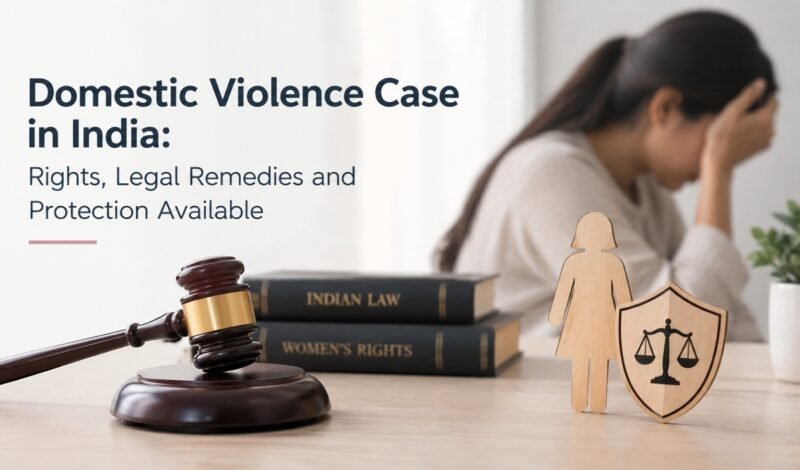

Domestic violence is not limited to physical abuse. It can also involve emotional, verbal, sexual or economic abuse, threats, intimidation, harassment and other forms of controlling behaviour within a domestic relationship. For a person experiencing such abuse, understanding the available legal remedies can be an important first step toward safety and justice. In India, the Protection of Women from Domestic Violence Act, 2005 (PWDVA) provides a legal framework for protecting women facing domestic violence and seeking relief through the court. The law provides several remedies, including protection orders, residence orders, monetary relief, temporary custody and compensation.
If you or someone close to you is facing domestic violence, obtaining timely advice from an experienced domestic violence lawyer in Noida or Delhi NCR can help you understand the appropriate legal options based on the circumstances of the case.
What Is Domestic Violence Under Indian Law?
Under the Protection of Women from Domestic Violence Act, 2005, domestic violence covers more than physical assault. The law recognises different forms of abuse that can affect a woman’s physical safety, emotional well-being, financial independence and dignity.
Domestic violence may include:
- Physical abuse or assault
- Sexual abuse
- Verbal or emotional abuse
- Economic abuse
- Threats or intimidation
- Harassment relating to unlawful dowry demands
- Controlling access to financial resources
- Conduct that causes physical or mental harm
The nature and circumstances of every case are different. Therefore, it is important to document incidents and seek appropriate legal advice instead of assuming that only physical violence can justify legal action.
What Legal Protection Is Available in a Domestic Violence Case?
The Domestic Violence Act provides several forms of relief. Depending on the facts of the case, a Magistrate may grant one or more remedies.
1. Protection Order
A protection order is intended to protect the aggrieved person from further acts of domestic violence. Under Section 18, the Magistrate can pass directions restricting the respondent from committing acts of domestic violence, aiding or abetting such acts, contacting the aggrieved person in specified circumstances or engaging in other conduct prohibited by the order. Such an order can be particularly important where there is an ongoing threat or repeated harassment.
2. Residence Order
A woman facing domestic violence may also have legal protection concerning her residence. Section 17 recognises a woman’s right to reside in the shared household, subject to the law. Section 19 further provides for residence-related orders, which may include protecting possession, restricting interference with residence or directing appropriate alternate accommodation or rent in suitable circumstances. This can become especially important when domestic violence is accompanied by attempts to force a woman out of the shared household.
3. Monetary Relief and Maintenance
Domestic violence can create financial losses and expenses. Section 20 allows the Magistrate to grant monetary relief for expenses incurred and losses suffered as a result of domestic violence. Depending on the circumstances, monetary relief may cover certain losses and may include maintenance-related relief. The amount and nature of relief depend on the facts and financial circumstances of the case. A domestic violence lawyer in Delhi NCR can help assess the financial documents and circumstances relevant to a claim.
4. Temporary Custody of Children
Where children are involved, domestic violence proceedings can also raise questions about their immediate safety and care. Under Section 21, the Magistrate may grant temporary custody of a child to the aggrieved person and may make appropriate arrangements concerning visitation where required. Child custody is ultimately fact-specific and the welfare and safety of the child remain important considerations.
5. Compensation for Mental or Emotional Harm
Domestic abuse can have consequences beyond physical injuries. Mental torture, emotional distress and other harm may also be relevant. Section 22 allows the Magistrate to order compensation and damages for injuries, including mental torture and emotional distress caused by acts of domestic violence.
How to File a Domestic Violence Case in India?
A person seeking relief under the Domestic Violence Act may approach the appropriate Magistrate through an application under Section 12. The process generally involves the following steps:
Step 1: Record the Incidents
Maintain a record of incidents involving abuse, threats, harassment, financial control or other relevant conduct. Keep copies of messages, emails, photographs, medical records and other documents where available.
Step 2: Seek Immediate Safety
If there is an immediate threat to life or physical safety, prioritise reaching a safe location and contacting appropriate emergency or law-enforcement services.
Step 3: Consult a Lawyer
An experienced domestic violence lawyer in Noida can review the circumstances and explain possible remedies, documentation requirements and appropriate legal proceedings.
Step 4: File the Appropriate Application
An application seeking relief can be presented before the competent Magistrate. The Act also provides for assistance through Protection Officers and service providers.
Step 5: Seek Appropriate Relief
Depending on the situation, the application may seek protection, residence, monetary relief, custody, compensation or other appropriate remedies.
Step 6: Seek Interim Protection Where Necessary
Section 23 empowers the Magistrate to grant interim orders and, where the statutory requirements are met, ex parte orders. This can be important in cases where immediate protection is required.
What Evidence Can Be Useful in a Domestic Violence Case?
Evidence can help establish the circumstances and impact of alleged abuse. Depending on the case, useful material may include:
- Medical reports and treatment records
- Photographs of injuries or property damage
- WhatsApp messages, emails or other communications
- Audio or video recordings where legally obtained and admissible
- Bank statements and financial records
- Police complaints or reports
- Domestic Incident Reports, where applicable
- Witness statements
- Documents relating to residence or shared household
- Relevant photographs, letters or other records
Not every case will have the same evidence. The absence of one particular type of evidence does not automatically determine the outcome of a case. A lawyer can explain what evidence is relevant and how it should be preserved.
Where Can a Domestic Violence Case Be Filed?
Section 27 of the Domestic Violence Act specifies the jurisdiction of the competent Magistrate. Generally, proceedings may be brought before the court having jurisdiction where the aggrieved person permanently or temporarily resides, carries on business or is employed, where the respondent resides or works or where the cause of action has arisen. For people living in Noida, Greater Noida or other parts of Delhi NCR, determining the correct court jurisdiction is an important part of the legal process. This is one reason why consulting a domestic violence lawyer in Noida or Delhi NCR can help avoid unnecessary procedural complications.
Why Legal Advice Matters in Domestic Violence Cases
Domestic violence cases can involve several connected legal issues, including matrimonial disputes, divorce, maintenance, child custody, residence rights and criminal proceedings. A lawyer can help evaluate the complete circumstances instead of looking at one issue in isolation.
Professional legal assistance may help with:
- Understanding available remedies
- Preparing and reviewing documents
- Drafting applications and complaints
- Seeking protection or interim relief
- Addressing residence-related issues
- Presenting financial claims
- Handling child custody-related concerns
- Representing the client before the appropriate court
- Responding to allegations or proceedings where the person is the respondent
Because every domestic violence matter has different facts, legal strategy should be based on the individual circumstances rather than a standard template.
Domestic Violence Lawyer in Noida and Delhi NCR
If you are facing domestic violence, harassment or threats within a domestic relationship, timely legal guidance can help you understand your rights and available remedies. An experienced domestic violence lawyer in Noida can assist with matters involving protection orders, residence rights, monetary relief, custody issues and compensation under applicable law. For individuals located in Delhi and the surrounding region, a domestic violence lawyer in Delhi NCR can also provide guidance regarding the appropriate court, documentation and legal proceedings. The objective of legal action is not simply to initiate a case. It is to understand the available remedies, protect the affected person’s legal rights and pursue appropriate relief based on the circumstances.
Conclusion
Domestic violence can affect a person’s safety, dignity, emotional well-being and financial security. Indian law provides several remedies to women facing domestic violence, including protection orders, residence orders, monetary relief, temporary custody and compensation. If you are experiencing abuse or believe that someone close to you is at risk, it is important to take the situation seriously and seek appropriate assistance. Keeping relevant records, prioritising safety and obtaining timely legal advice can help you make informed decisions. If you are looking for a domestic violence lawyer in Noida or Delhi NCR, professional legal guidance can help you understand the applicable law and determine the appropriate course of action for your circumstances.
Frequently Asked Questions
1. What is considered domestic violence in India?
Domestic violence can include physical, sexual, verbal, emotional and economic abuse, as well as certain forms of threats, harassment and dowry-related abuse recognised under the applicable law.
2. Which law deals with domestic violence in India?
The principal legislation is the Protection of Women from Domestic Violence Act, 2005, which provides various forms of civil relief and protection to eligible aggrieved women.
3. What relief can a woman seek in a domestic violence case?
Depending on the circumstances, relief may include protection orders, residence orders, monetary relief, temporary custody of children and compensation.
4. Can a woman seek residence protection in a domestic violence case?
Yes. Section 17 recognises a woman’s right to reside in the shared household, while Section 19 provides for residence-related orders in appropriate cases.
5. Can an interim order be obtained in a domestic violence case?
Yes. Section 23 empowers the Magistrate to grant interim relief and, where the statutory conditions are satisfied, ex parte orders.
6. How can a domestic violence lawyer in Noida help?
A lawyer can help you understand your legal options, prepare relevant documents, draft applications, seek appropriate relief and represent you before the competent court. The specific legal strategy depends on the facts of the case.