
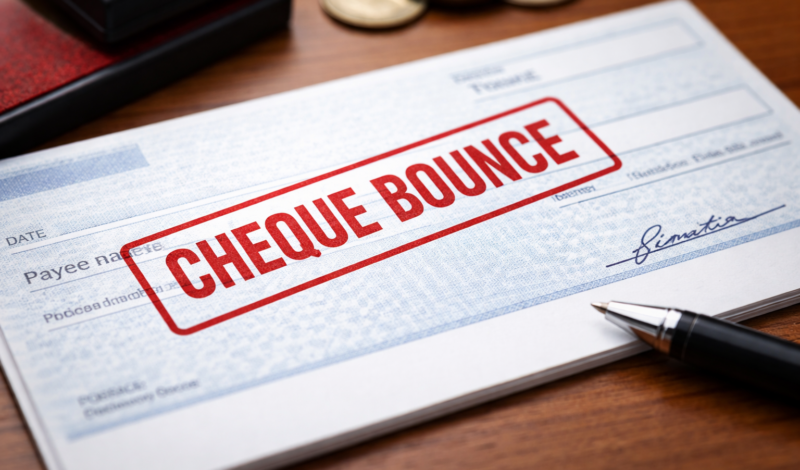

Cheque bounce cases are among the most common financial disputes in India. Governed primarily by Section 138 of the Negotiable Instruments Act, 1881, cheque dishonour is treated as a criminal offense when certain conditions are met. Understanding the legal rights, notice process, and court procedure is essential for both payees and drawers to safeguard their interests and avoid unnecessary litigation.
What is a Cheque Bounce Case?
A cheque bounce occurs when a bank refuses to honor a cheque presented for payment. This may happen due to reasons such as insufficient funds, signature mismatch, account closure, or exceeding arrangement limits. However, not all cheque bounce instances attract criminal liability. The law specifically penalizes dishonour due to insufficient funds or when it exceeds the amount arranged with the bank.
Legal Framework Under Section 138
Section 138 of the Negotiable Instruments Act criminalizes cheque dishonour for insufficiency of funds. For an offense to be established under this section, the following conditions must be fulfilled:
- The cheque must be issued for the discharge of a legally enforceable debt or liability
- The cheque must be presented within its validity period (usually 3 months)
- The cheque must be dishonoured due to insufficient funds
- The payee must send a legal notice within 30 days of receiving the bank memo
- The drawer must fail to make payment within 15 days of receiving the notice
If all these conditions are satisfied, the payee has the right to initiate legal proceedings.
Legal Rights of the Payee (Complainant)
The payee, or the person receiving the cheque, is protected under the law and enjoys several rights:
1. Right to Demand Payment
The payee can legally demand the cheque amount by issuing a formal legal notice to the drawer.
2. Right to File a Criminal Complaint
If the drawer fails to pay within the prescribed time, the payee can file a complaint before the Magistrate.
3. Right to Compensation
Courts may order compensation that can be up to twice the cheque amount.
4. Right to Expedite Trial
Cheque bounce cases are generally tried summarily to ensure faster resolution.
Legal Rights of the Drawer (Accused)
The drawer also has certain rights to ensure fair trial:
- Right to contest the case and present evidence
- Right to prove absence of legally enforceable debt
- Right to cross-examine the complainant
- Right to appeal against the judgment
This balance ensures that genuine disputes are distinguished from fraudulent claims.
Cheque Bounce Notice Process
The legal notice is a crucial step in cheque bounce cases. Without issuing a proper notice, a complaint under Section 138 cannot be filed.
Step-by-Step Notice Process
1. Receipt of Bank Memo
When the cheque is dishonoured, the bank issues a return memo stating the reason for dishonour.
2. Drafting the Legal Notice
The payee must send a written legal notice to the drawer within 30 days of receiving the memo. The notice should include:
- Details of the cheque (number, date, amount)
- Reason for dishonour
- Demand for payment within 15 days
- Consequences of non-payment
3. Sending the Notice
The notice should be sent through registered post, speed post, or courier to ensure proof of delivery.
4. Waiting Period
The drawer is given 15 days from the date of receipt of the notice to make payment.
If the drawer fails to pay within this period, the cause of action arises, allowing the complainant to approach the court.
Court Procedure in Cheque Bounce Cases
Once the notice period expires, the complainant can initiate legal proceedings. The process typically involves the following stages:
1. Filing of Complaint
The complaint must be filed before the Magistrate within 30 days from the expiry of the notice period. Necessary documents include:
- Original cheque
- Bank return memo
- Copy of legal notice
- Proof of notice delivery
2. Cognizance by Magistrate
The Magistrate examines the complaint and supporting documents. If satisfied, the court takes cognizance and issues summons to the accused.
3. Appearance of Accused
The accused must appear before the court and may seek bail, as the offense is bailable.
4. Plea of Accused
The court records the plea of the accused. If the accused pleads guilty, the court may pass judgment immediately.
5. Evidence Stage
Both parties present their evidence. The complainant submits proof of the transaction, while the accused may challenge the validity of the claim.
6. Cross-Examination
The accused has the right to cross-examine the complainant to test the credibility of the evidence.
7. Final Arguments
Both sides present their final arguments before the court.
8. Judgment
The court delivers its judgment. If the accused is found guilty, penalties may include:
- Imprisonment up to 2 years
- Fine up to twice the cheque amount
- Both imprisonment and fine
Common Defenses in Cheque Bounce Cases
The accused may take several defenses, such as:
- No legally enforceable debt existed
- Cheque was issued as security
- Signature was forged or unauthorized
- Notice was not properly served
Courts carefully examine these defenses before deciding the case.
Practical Tips to Avoid Cheque Bounce Issues
- Maintain sufficient bank balance before issuing cheques
- Avoid issuing blank or post-dated cheques without clarity
- Keep records of all financial transactions
- Verify details before accepting cheques
- Use digital payment methods where possible
Conclusion
Cheque bounce cases, though common, involve a structured legal process that protects both parties. Understanding your legal rights, following the correct notice procedure, and being aware of court processes can make a significant difference in the outcome of the case. Whether you are a business owner or an individual, staying informed helps you handle financial disputes effectively and avoid legal complications.